







Rich cultural, spiritual heritage encased in Shah Qasem Anvar’s shrine
The shrine of Shah Qasem Anvar in Langar village of Torbat-e Jam is not only a significant historic monument with centuries of history but also a profound emblem of Iran’s rich cultural and spiritual heritage. Faramarz Saber Moqaddam, the head of the Cultural Heritage, Tourism, and Handicrafts Department of Torbat-e Jam, stated in an interview with ISNA, “The tomb of Qasem Anvar, situated amidst the breathtaking natural scenery of Khorasan Razavi Province, has long been recognized as a central hub for mystical and cultural gatherings, especially during the Safavid era.”
He further added that through ongoing restoration efforts, there is hope that this historic building will be restored to its former splendor and grandeur. This would not only attract tourists and researchers but also serve as a lasting reminder of Iran’s rich cultural and spiritual values.
He also noted that emergency restoration work has commenced on the shrine. “This mausoleum, with its rich and valuable history, is located approximately 24 kilometers northwest of Torbat-e Jam,” he explained, “and stands as one of Iran’s most important historic sites.”
He pointed out that the structure was originally built by Amir Ali Shirnavai, a prominent figure of the Safavid period, and contains inscriptions from that era that vividly reflect the magnificence of the time. Emphasizing its significance, he stated, “Shah Qasem Anvar was a renowned mystic and Sufi of the 8th and 9th centuries AH. He is buried here, and his influence on the history of mysticism and Persian literature remains profound.”
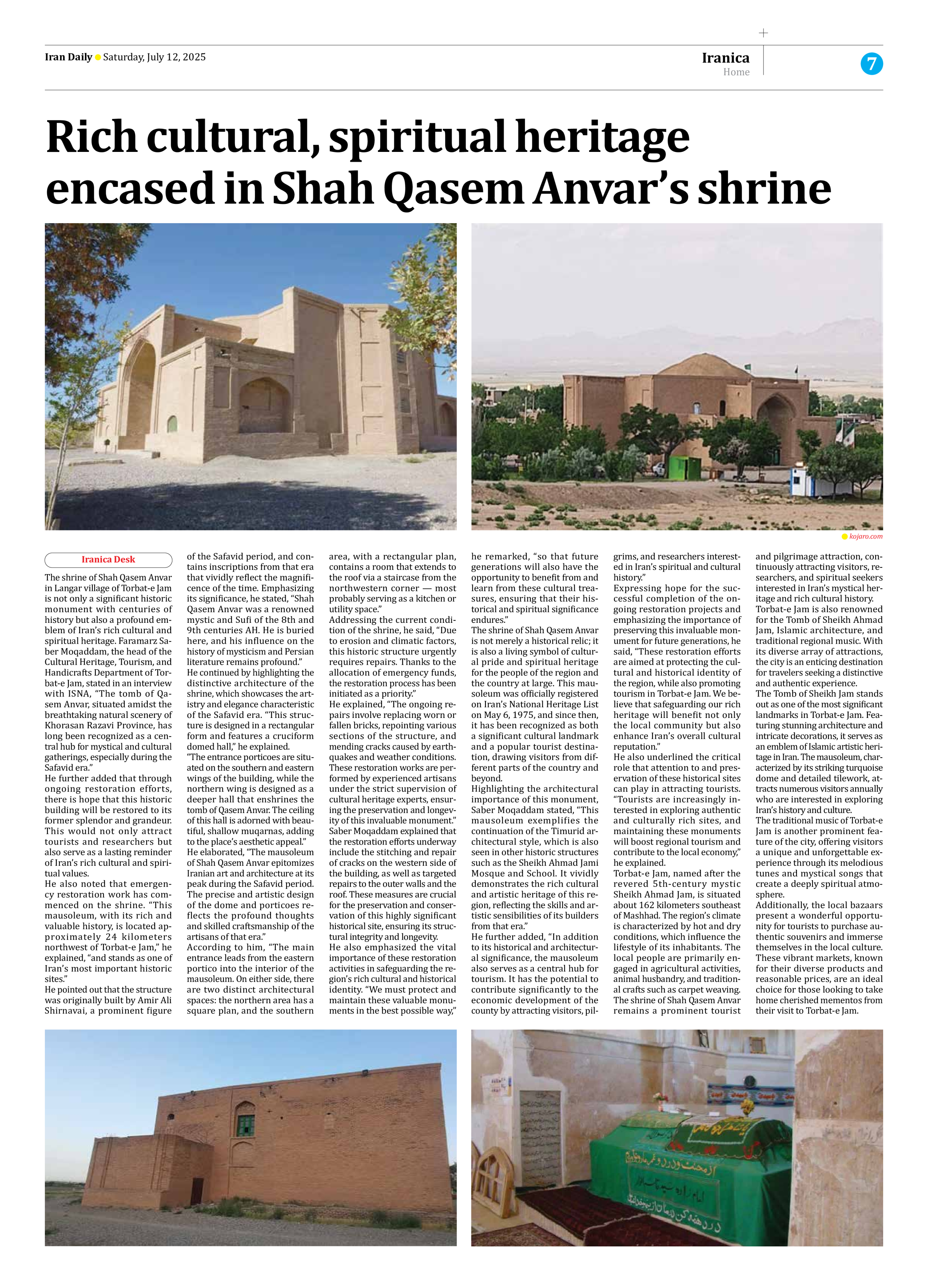
He continued by highlighting the distinctive architecture of the shrine, which showcases the artistry and elegance characteristic of the Safavid era. “This structure is designed in a rectangular form and features a cruciform domed hall,” he explained.
“The entrance porticoes are situated on the southern and eastern wings of the building, while the northern wing is designed as a deeper hall that enshrines the tomb of Qasem Anvar. The ceiling of this hall is adorned with beautiful, shallow muqarnas, adding to the place’s aesthetic appeal.”
He elaborated, “The mausoleum of Shah Qasem Anvar epitomizes Iranian art and architecture at its peak during the Safavid period. The precise and artistic design of the dome and porticoes reflects the profound thoughts and skilled craftsmanship of the artisans of that era.”
According to him, “The main entrance leads from the eastern portico into the interior of the mausoleum. On either side, there are two distinct architectural spaces: the northern area has a square plan, and the southern area, with a rectangular plan, contains a room that extends to the roof via a staircase from the northwestern corner — most probably serving as a kitchen or utility space.”
Addressing the current condition of the shrine, he said, “Due to erosion and climatic factors, this historic structure urgently requires repairs. Thanks to the allocation of emergency funds, the restoration process has been initiated as a priority.”
He explained, “The ongoing repairs involve replacing worn or fallen bricks, repointing various sections of the structure, and mending cracks caused by earthquakes and weather conditions. These restoration works are performed by experienced artisans under the strict supervision of cultural heritage experts, ensuring the preservation and longevity of this invaluable monument.”
Saber Moqaddam explained that the restoration efforts underway include the stitching and repair of cracks on the western side of the building, as well as targeted repairs to the outer walls and the roof. These measures are crucial for the preservation and conservation of this highly significant historical site, ensuring its structural integrity and longevity.
He also emphasized the vital importance of these restoration activities in safeguarding the region’s rich cultural and historical identity. “We must protect and maintain these valuable monuments in the best possible way,” he remarked, “so that future generations will also have the opportunity to benefit from and learn from these cultural treasures, ensuring that their historical and spiritual significance endures.”
The shrine of Shah Qasem Anvar is not merely a historical relic; it is also a living symbol of cultural pride and spiritual heritage for the people of the region and the country at large. This mausoleum was officially registered on Iran’s National Heritage List on May 6, 1975, and since then, it has been recognized as both a significant cultural landmark and a popular tourist destination, drawing visitors from different parts of the country and beyond.
Highlighting the architectural importance of this monument, Saber Moqaddam stated, “This mausoleum exemplifies the continuation of the Timurid architectural style, which is also seen in other historic structures such as the Sheikh Ahmad Jami Mosque and School. It vividly demonstrates the rich cultural and artistic heritage of this region, reflecting the skills and artistic sensibilities of its builders from that era.”
He further added, “In addition to its historical and architectural significance, the mausoleum also serves as a central hub for tourism. It has the potential to contribute significantly to the economic development of the county by attracting visitors, pilgrims, and researchers interested in Iran’s spiritual and cultural history.”
Expressing hope for the successful completion of the ongoing restoration projects and emphasizing the importance of preserving this invaluable monument for future generations, he said, “These restoration efforts are aimed at protecting the cultural and historical identity of the region, while also promoting tourism in Torbat-e Jam. We believe that safeguarding our rich heritage will benefit not only the local community but also enhance Iran’s overall cultural reputation.”
He also underlined the critical role that attention to and preservation of these historical sites can play in attracting tourists. “Tourists are increasingly interested in exploring authentic and culturally rich sites, and maintaining these monuments will boost regional tourism and contribute to the local economy,” he explained.
Torbat-e Jam, named after the revered 5th-century mystic Sheikh Ahmad Jam, is situated about 162 kilometers southeast of Mashhad. The region’s climate is characterized by hot and dry conditions, which influence the lifestyle of its inhabitants. The local people are primarily engaged in agricultural activities, animal husbandry, and traditional crafts such as carpet weaving. The shrine of Shah Qasem Anvar remains a prominent tourist and pilgrimage attraction, continuously attracting visitors, researchers, and spiritual seekers interested in Iran’s mystical heritage and rich cultural history.
Torbat-e Jam is also renowned for the Tomb of Sheikh Ahmad Jam, Islamic architecture, and traditional regional music. With its diverse array of attractions, the city is an enticing destination for travelers seeking a distinctive and authentic experience.
The Tomb of Sheikh Jam stands out as one of the most significant landmarks in Torbat-e Jam. Featuring stunning architecture and intricate decorations, it serves as an emblem of Islamic artistic heritage in Iran. The mausoleum, characterized by its striking turquoise dome and detailed tilework, attracts numerous visitors annually who are interested in exploring Iran’s history and culture.
The traditional music of Torbat-e Jam is another prominent feature of the city, offering visitors a unique and unforgettable experience through its melodious tunes and mystical songs that create a deeply spiritual atmosphere.
Additionally, the local bazaars present a wonderful opportunity for tourists to purchase authentic souvenirs and immerse themselves in the local culture. These vibrant markets, known for their diverse products and reasonable prices, are an ideal choice for those looking to take home cherished mementos from their visit to Torbat-e Jam.