





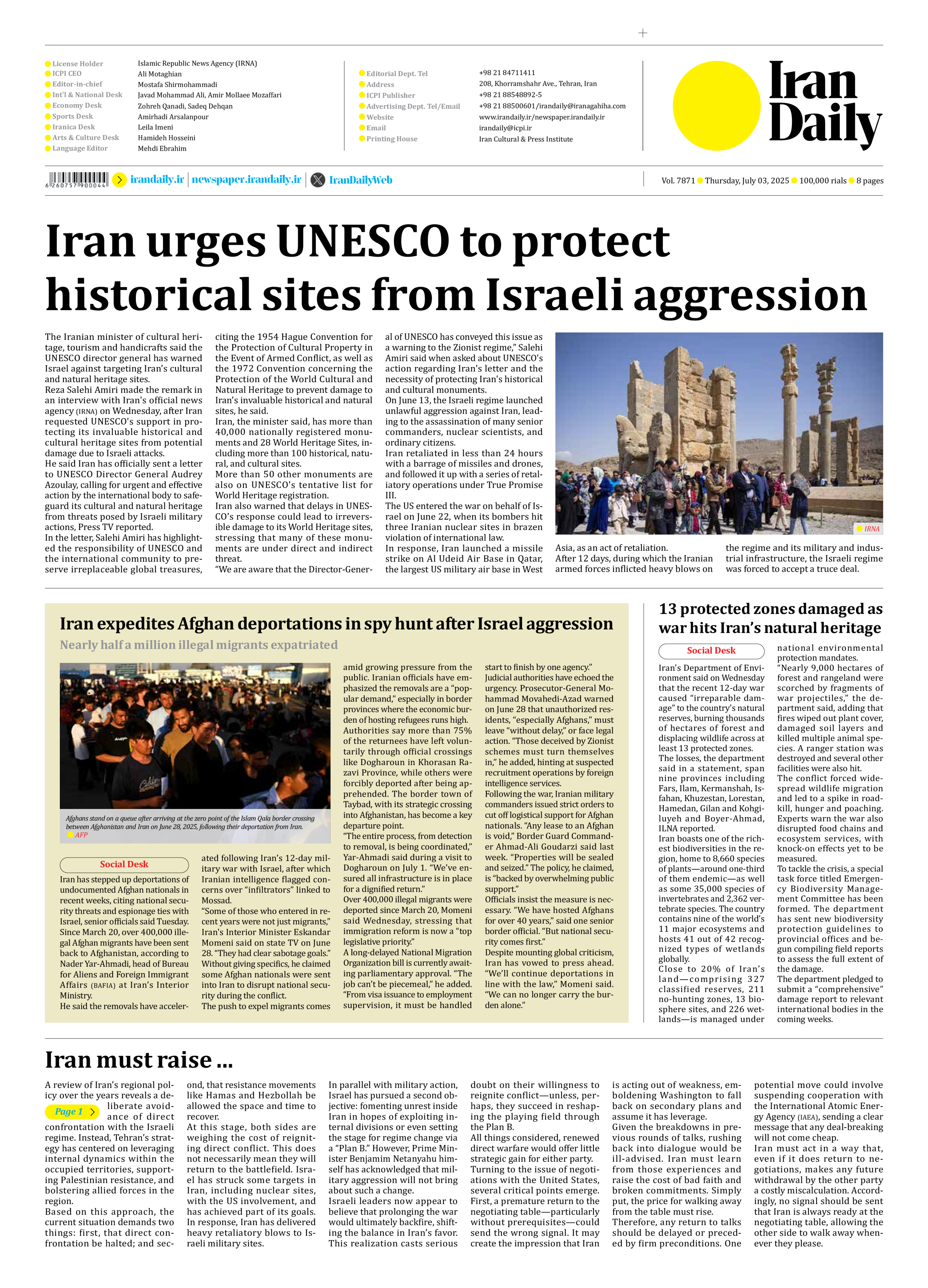


Iran expedites Afghan deportations in spy hunt after Israel aggression
Nearly half a million illegal migrants expatriated
Iran has stepped up deportations of undocumented Afghan nationals in recent weeks, citing national security threats and espionage ties with Israel, senior officials said Tuesday.
Since March 20, over 400,000 illegal Afghan migrants have been sent back to Afghanistan, according to Nader Yar-Ahmadi, head of Bureau for Aliens and Foreign Immigrant Affairs (BAFIA) at Iran’s Interior Ministry.
He said the removals have accelerated following Iran’s 12-day military war with Israel, after which Iranian intelligence flagged concerns over “infiltrators” linked to Mossad.
“Some of those who entered in recent years were not just migrants,” Iran's Interior Minister Eskandar Momeni said on state TV on June 28. “They had clear sabotage goals.” Without giving specifics, he claimed some Afghan nationals were sent into Iran to disrupt national security during the conflict.
The push to expel migrants comes amid growing pressure from the public. Iranian officials have emphasized the removals are a “popular demand,” especially in border provinces where the economic burden of hosting refugees runs high.
Authorities say more than 75% of the returnees have left voluntarily through official crossings like Dogharoun in Khorasan Razavi Province, while others were forcibly deported after being apprehended. The border town of Taybad, with its strategic crossing into Afghanistan, has become a key departure point.
“The entire process, from detection to removal, is being coordinated,” Yar-Ahmadi said during a visit to Dogharoun on July 1. “We’ve ensured all infrastructure is in place for a dignified return.”
Over 400,000 illegal migrants were deported since March 20, Momeni said Wednesday, stressing that immigration reform is now a “top legislative priority.”
A long-delayed National Migration Organization bill is currently awaiting parliamentary approval. “The job can’t be piecemeal,” he added. “From visa issuance to employment supervision, it must be handled start to finish by one agency.”
Judicial authorities have echoed the urgency. Prosecutor-General Mohammad Movahedi-Azad warned on June 28 that unauthorized residents, “especially Afghans,” must leave “without delay,” or face legal action. “Those deceived by Zionist schemes must turn themselves in,” he added, hinting at suspected recruitment operations by foreign intelligence services.
Following the war, Iranian military commanders issued strict orders to cut off logistical support for Afghan nationals. “Any lease to an Afghan is void,” Border Guard Commander Ahmad-Ali Goudarzi said last week. “Properties will be sealed and seized.” The policy, he claimed, is “backed by overwhelming public support.”
Officials insist the measure is necessary. “We have hosted Afghans for over 40 years,” said one senior border official. “But national security comes first.”
Despite mounting global criticism, Iran has vowed to press ahead. “We’ll continue deportations in line with the law,” Momeni said. “We can no longer carry the burden alone.”