







Yazd’s goldsmithing tradition bridging cultural identity, tourism growth
The national identity and history of each land play a significant role in the development of tourism and regional economy. Preserving and promoting this heritage not only contributes to the revival of traditional culture and arts but also plays an important role in attracting both domestic and international tourists. Cultural tourism, by utilizing historical sites, architecture, handicrafts, and rituals, provides unique opportunities to showcase Iran’s rich culture and assists in the sustainable development of regions.
Furthermore, the development of handicrafts — considered one of the indicators of cultural heritage — not only ensures the preservation of traditional arts but also serves as a source of income and employment for local communities. Various cities across Iran leverage their distinctive cultural identities in their journey toward becoming tourist destinations, benefiting from this reciprocal relationship.
Yazd, the capital city of central province of Yazd, has managed to create a unique attraction for tourists by focusing on preserving traditional architecture and restoring old windcatchers. Hosting cultural festivals and handicraft exhibitions — such as carpet weaving, confectionery making, and basketry — plays a crucial role in attracting tourists and boosting local industries.
According to reports from the public relations department of the Yazd Provincial Department of Cultural Heritage, Tourism, and Handicrafts, a significant meeting was held with the presence of related national and provincial officials in Yazd Chamber of Commerce. During this meeting, experts discussed the integration of tourism and handicrafts and their impact on eco-tourism and increasing Yazd’s appeal.
One of the important topics was the plan to register Yazd as a UNESCO world heritage city for its traditional jewelry arts and to harness the potential of this craft in attracting tourists and enhancing Yazd’s brand. Emphasizing the promotion and branding of Yazd’s exquisite handicrafts and their attractive packaging for guests and ambassadors was also a focal point. The celebration of Yazd’s UNESCO world heritage registration was another key subject discussed.
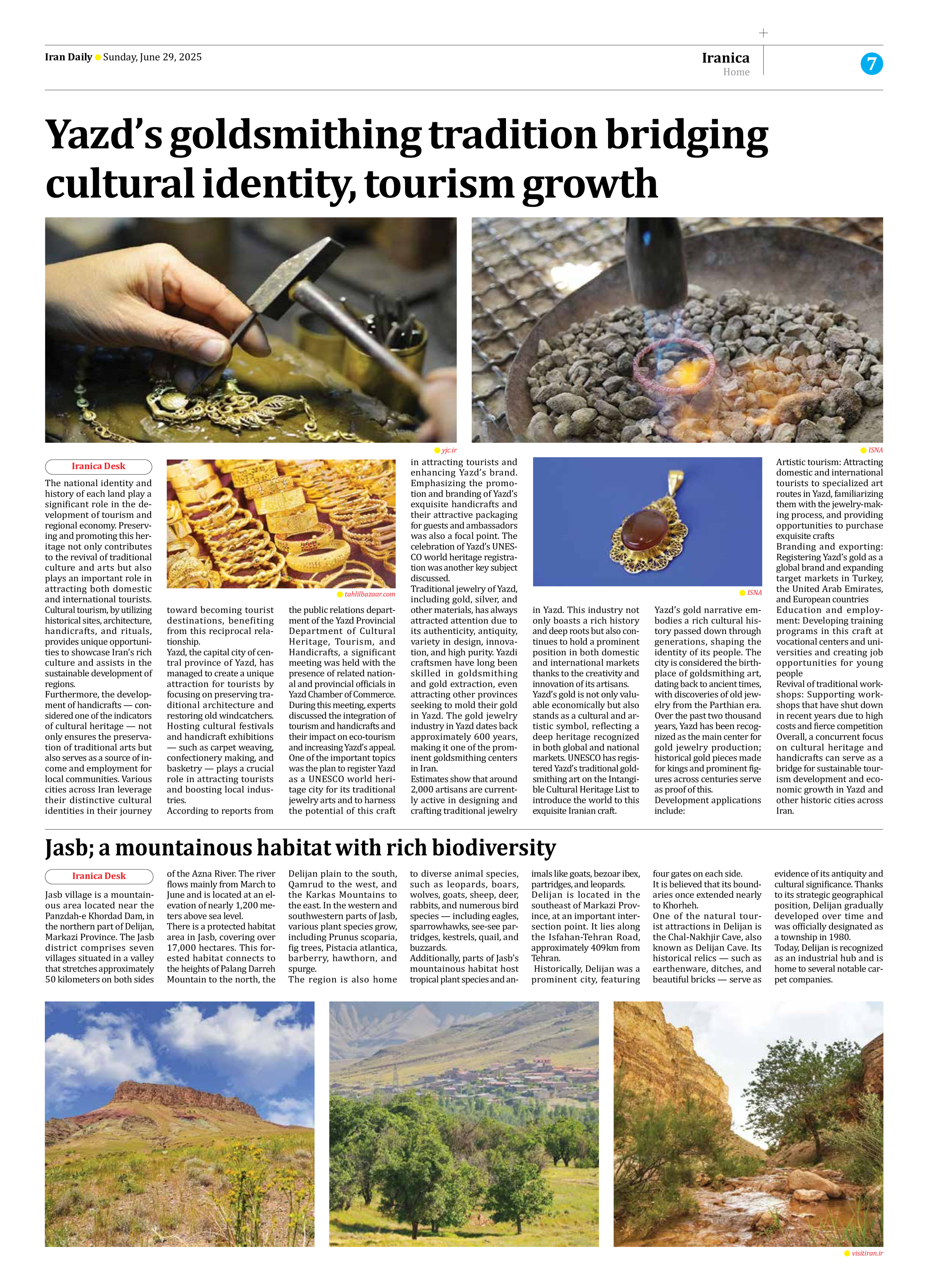
Traditional jewelry of Yazd, including gold, silver, and other materials, has always attracted attention due to its authenticity, antiquity, variety in design, innovation, and high purity. Yazdi craftsmen have long been skilled in goldsmithing and gold extraction, even attracting other provinces seeking to mold their gold in Yazd. The gold jewelry industry in Yazd dates back approximately 600 years, making it one of the prominent goldsmithing centers in Iran.
Estimates show that around 2,000 artisans are currently active in designing and crafting traditional jewelry in Yazd. This industry not only boasts a rich history and deep roots but also continues to hold a prominent position in both domestic and international markets thanks to the creativity and innovation of its artisans.
Yazd’s gold is not only valuable economically but also stands as a cultural and artistic symbol, reflecting a deep heritage recognized in both global and national markets. UNESCO has registered Yazd’s traditional goldsmithing art on the Intangible Cultural Heritage List to introduce the world to this exquisite Iranian craft.
Yazd’s gold narrative embodies a rich cultural history passed down through generations, shaping the identity of its people. The city is considered the birthplace of goldsmithing art, dating back to ancient times, with discoveries of old jewelry from the Parthian era. Over the past two thousand years, Yazd has been recognized as the main center for gold jewelry production; historical gold pieces made for kings and prominent figures across centuries serve as proof of this.
Development applications include:
Artistic tourism: Attracting domestic and international tourists to specialized art routes in Yazd, familiarizing them with the jewelry-making process, and providing opportunities to purchase exquisite crafts
Branding and exporting: Registering Yazd’s gold as a global brand and expanding target markets in Turkey, the United Arab Emirates, and European countries
Education and employment: Developing training programs in this craft at vocational centers and universities and creating job opportunities for young people
Revival of traditional workshops: Supporting workshops that have shut down in recent years due to high costs and fierce competition
Overall, a concurrent focus on cultural heritage and handicrafts can serve as a bridge for sustainable tourism development and economic growth in Yazd and other historic cities across Iran.