







UN envoy: Tehran open to regional nuclear consortium
Iran rejects limits on missile power, stresses enrichment on own soil
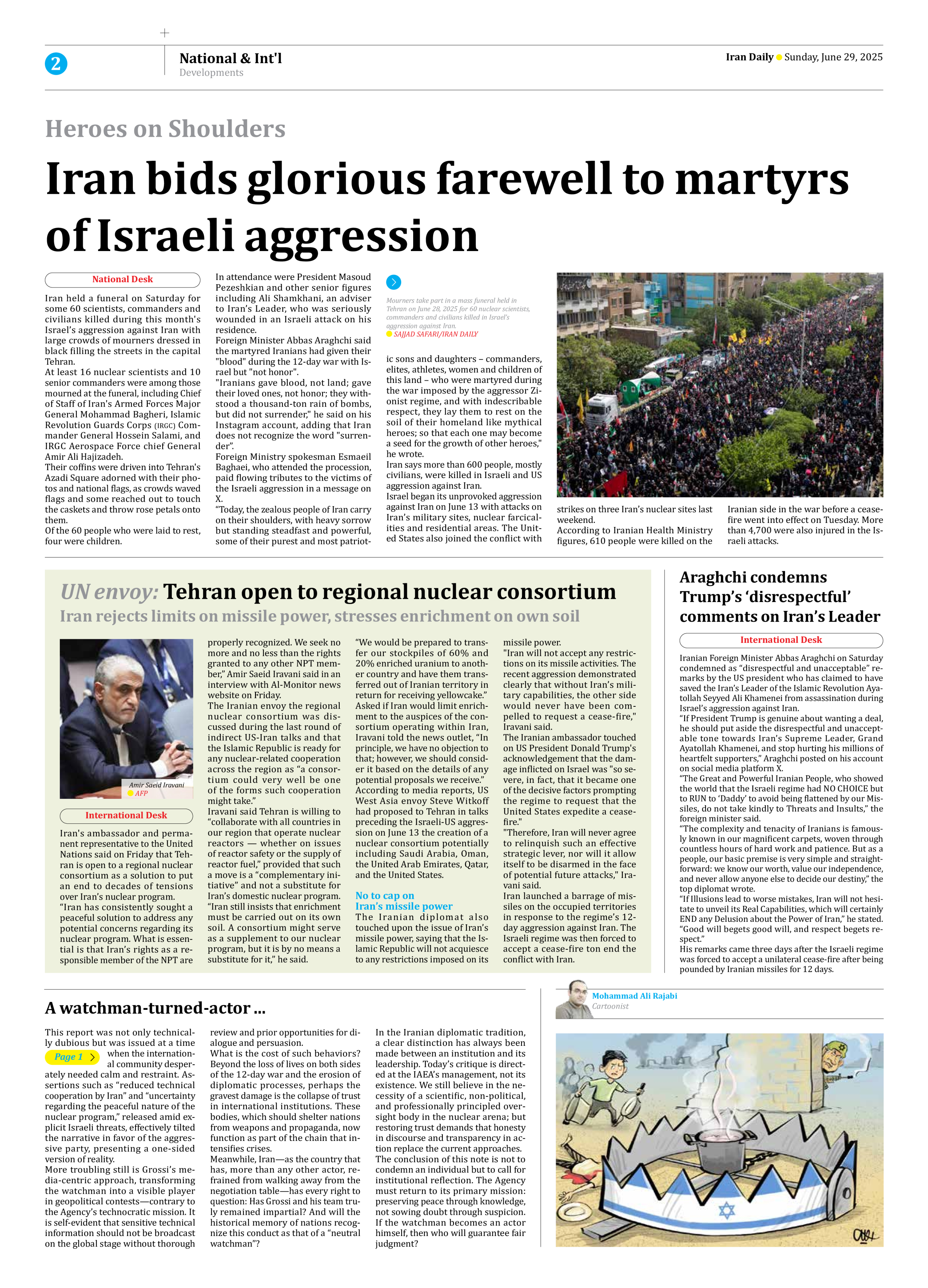
Iran's ambassador and permanent representative to the United Nations said on Friday that Tehran is open to a regional nuclear consortium as a solution to put an end to decades of tensions over Iran’s nuclear program.
“Iran has consistently sought a peaceful solution to address any potential concerns regarding its nuclear program. What is essential is that Iran’s rights as a responsible member of the NPT are properly recognized. We seek no more and no less than the rights granted to any other NPT member,” Amir Saeid Iravani said in an interview with Al-Monitor news website on Friday.
The Iranian envoy the regional nuclear consortium was discussed during the last round of indirect US-Iran talks and that the Islamic Republic is ready for any nuclear-related cooperation across the region as “a consortium could very well be one of the forms such cooperation might take.”
Iravani said Tehran is willing to “collaborate with all countries in our region that operate nuclear reactors — whether on issues of reactor safety or the supply of reactor fuel,” provided that such a move is a “complementary initiative” and not a substitute for Iran’s domestic nuclear program.
“Iran still insists that enrichment must be carried out on its own soil. A consortium might serve as a supplement to our nuclear program, but it is by no means a substitute for it,” he said.
“We would be prepared to transfer our stockpiles of 60% and 20% enriched uranium to another country and have them transferred out of Iranian territory in return for receiving yellowcake.”
Asked if Iran would limit enrichment to the auspices of the consortium operating within Iran, Iravani told the news outlet, “In principle, we have no objection to that; however, we should consider it based on the details of any potential proposals we receive.”
According to media reports, US West Asia envoy Steve Witkoff had proposed to Tehran in talks preceding the Israeli-US aggression on June 13 the creation of a nuclear consortium potentially including Saudi Arabia, Oman, the United Arab Emirates, Qatar, and the United States.
No to cap on
Iran’s missile power
The Iranian diplomat also touched upon the issue of Iran’s missile power, saying that the Islamic Republic will not acquiesce to any restrictions imposed on its missile power.
"Iran will not accept any restrictions on its missile activities. The recent aggression demonstrated clearly that without Iran’s military capabilities, the other side would never have been compelled to request a cease-fire," Iravani said.
The Iranian ambassador touched on US President Donald Trump's acknowledgement that the damage inflicted on Israel was "so severe, in fact, that it became one of the decisive factors prompting the regime to request that the United States expedite a cease-fire."
"Therefore, Iran will never agree to relinquish such an effective strategic lever, nor will it allow itself to be disarmed in the face of potential future attacks," Iravani said.
Iran launched a barrage of missiles on the occupied territories in response to the regime’s 12-day aggression against Iran. The Israeli regime was then forced to accept a cease-fire ton end the conflict with Iran.