







Explore ancient wonders beneath surface of Hilehvar village
There are numerous villages in East Azarbaijan Province built with hand-crafted architecture nestled within cliffs. Among them, Hilehvar village stands out as a site that offers much more than just visual interest — it provides visitors with an untouched experience of history and natural beauty.
Located in the north of Osku, roughly 44 kilometers from Tabriz and just two kilometers north of Kandovan, this historic village has a long and intriguing history. Although now abandoned, Hilehvar was registered on Iran’s National Heritage List in August 2005. At first glance, the village remains largely hidden and not immediately visible; it is a place shrouded in mystery.
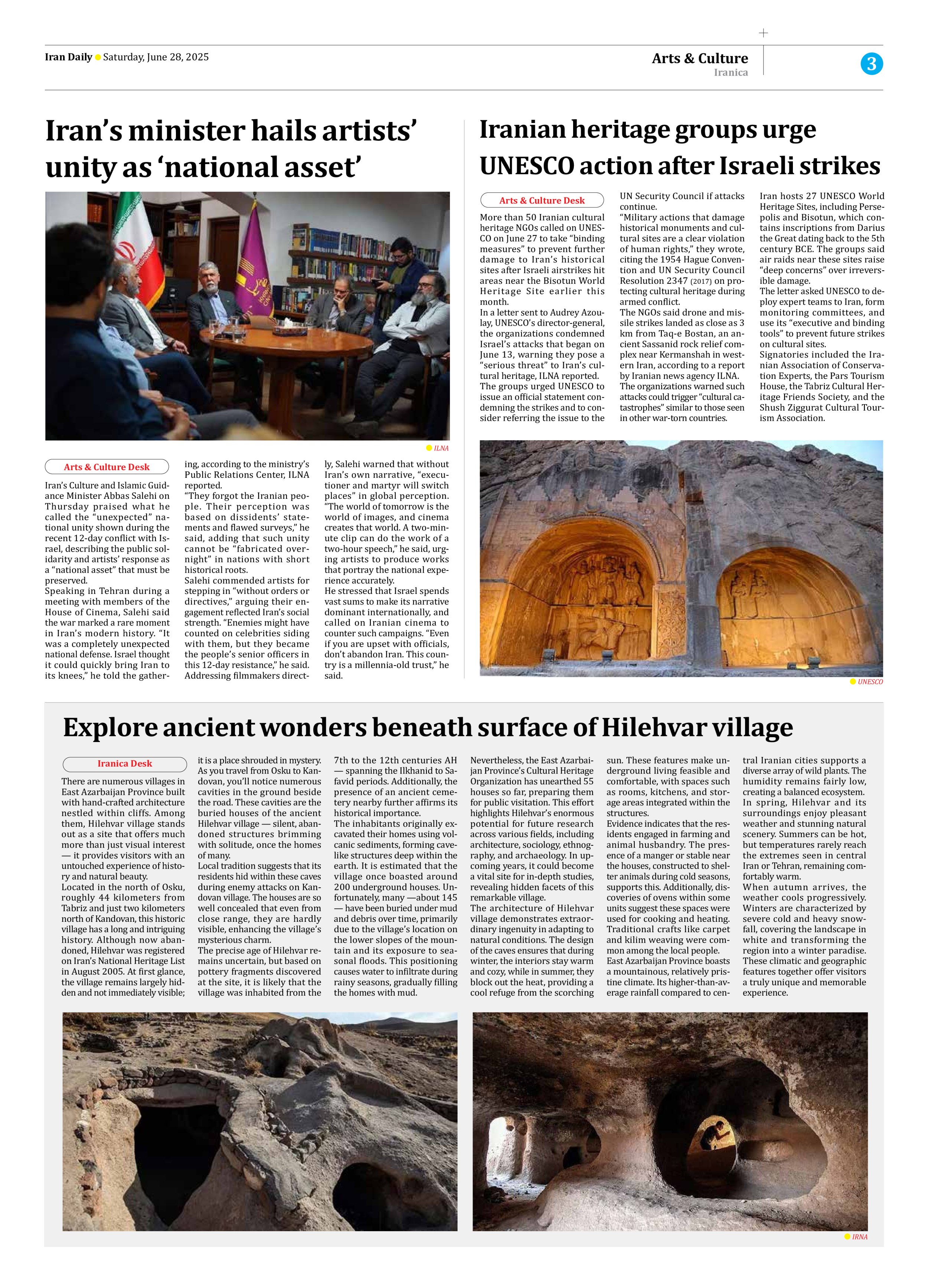
As you travel from Osku to Kandovan, you’ll notice numerous cavities in the ground beside the road. These cavities are the buried houses of the ancient Hilehvar village — silent, abandoned structures brimming with solitude, once the homes of many.
Local tradition suggests that its residents hid within these caves during enemy attacks on Kandovan village. The houses are so well concealed that even from close range, they are hardly visible, enhancing the village’s mysterious charm.
The precise age of Hilehvar remains uncertain, but based on pottery fragments discovered at the site, it is likely that the village was inhabited from the 7th to the 12th centuries AH — spanning the Ilkhanid to Safavid periods. Additionally, the presence of an ancient cemetery nearby further affirms its historical importance.
The inhabitants originally excavated their homes using volcanic sediments, forming cave-like structures deep within the earth. It is estimated that the village once boasted around 200 underground houses. Unfortunately, many —about 145 — have been buried under mud and debris over time, primarily due to the village’s location on the lower slopes of the mountain and its exposure to seasonal floods. This positioning causes water to infiltrate during rainy seasons, gradually filling the homes with mud.
Nevertheless, the East Azarbaijan Province’s Cultural Heritage Organization has unearthed 55 houses so far, preparing them for public visitation. This effort highlights Hilehvar’s enormous potential for future research across various fields, including architecture, sociology, ethnography, and archaeology. In upcoming years, it could become a vital site for in-depth studies, revealing hidden facets of this remarkable village.
The architecture of Hilehvar village demonstrates extraordinary ingenuity in adapting to natural conditions. The design of the caves ensures that during winter, the interiors stay warm and cozy, while in summer, they block out the heat, providing a cool refuge from the scorching sun. These features make underground living feasible and comfortable, with spaces such as rooms, kitchens, and storage areas integrated within the structures.
Evidence indicates that the residents engaged in farming and animal husbandry. The presence of a manger or stable near the houses, constructed to shelter animals during cold seasons, supports this. Additionally, discoveries of ovens within some units suggest these spaces were used for cooking and heating. Traditional crafts like carpet and kilim weaving were common among the local people.
East Azarbaijan Province boasts a mountainous, relatively pristine climate. Its higher-than-average rainfall compared to central Iranian cities supports a diverse array of wild plants. The humidity remains fairly low, creating a balanced ecosystem.
In spring, Hilehvar and its surroundings enjoy pleasant weather and stunning natural scenery. Summers can be hot, but temperatures rarely reach the extremes seen in central Iran or Tehran, remaining comfortably warm.
When autumn arrives, the weather cools progressively. Winters are characterized by severe cold and heavy snowfall, covering the landscape in white and transforming the region into a winter paradise. These climatic and geographic features together offer visitors a truly unique and memorable experience.