







Role of Bilankuh neighborhood in cultural legacy of Tabriz
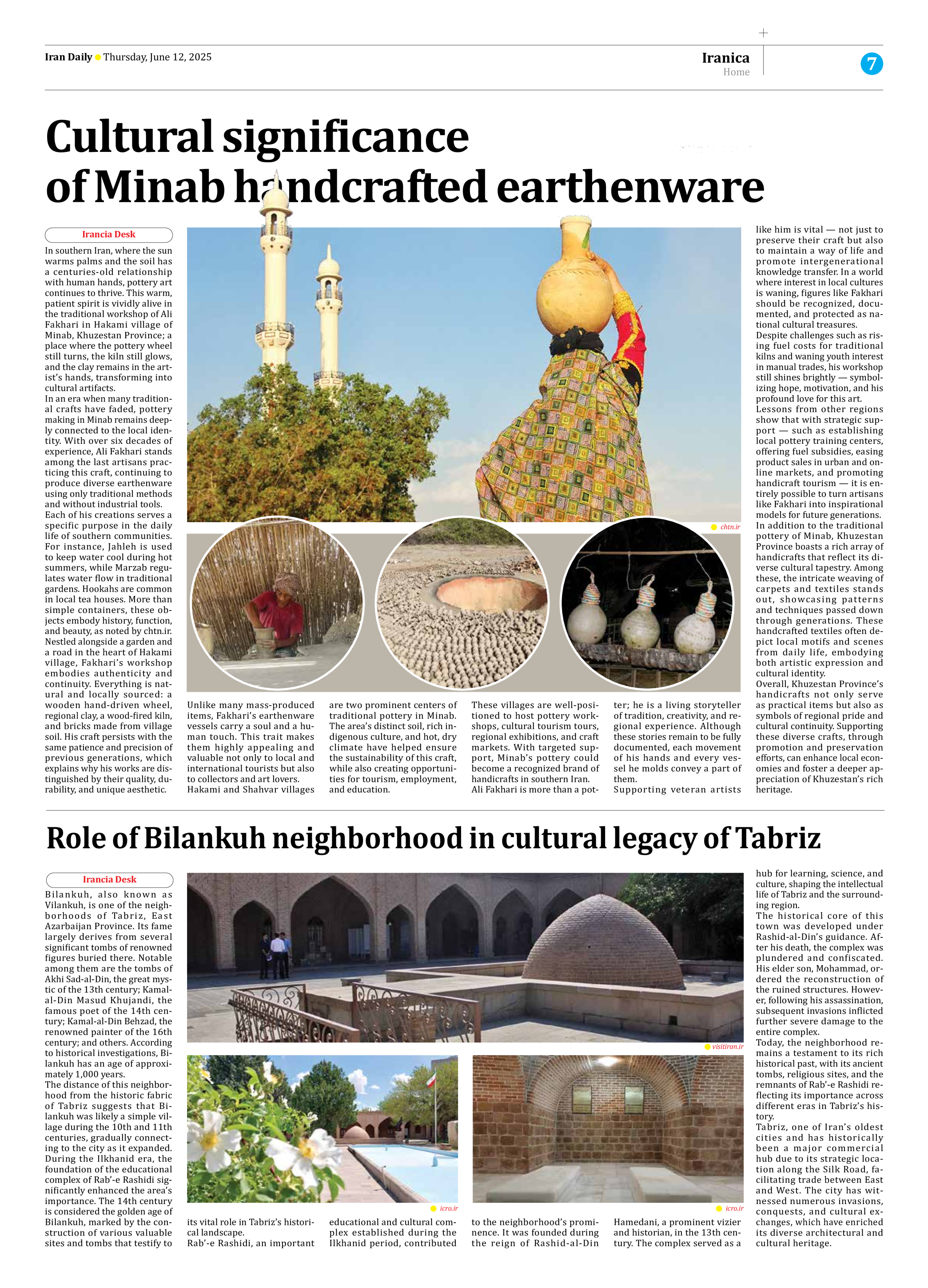
Bilankuh, also known as Vilankuh, is one of the neighborhoods of Tabriz, East Azarbaijan Province. Its fame largely derives from several significant tombs of renowned figures buried there. Notable among them are the tombs of Akhi Sad-al-Din, the great mystic of the 13th century; Kamal-al-Din Masud Khujandi, the famous poet of the 14th century; Kamal-al-Din Behzad, the renowned painter of the 16th century; and others. According to historical investigations, Bilankuh has an age of approximately 1,000 years.
The distance of this neighborhood from the historic fabric of Tabriz suggests that Bilankuh was likely a simple village during the 10th and 11th centuries, gradually connecting to the city as it expanded. During the Ilkhanid era, the foundation of the educational complex of Rab’-e Rashidi significantly enhanced the area’s importance. The 14th century is considered the golden age of Bilankuh, marked by the construction of various valuable sites and tombs that testify to its vital role in Tabriz’s historical landscape.
Rab’-e Rashidi, an important educational and cultural complex established during the Ilkhanid period, contributed to the neighborhood’s prominence. It was founded during the reign of Rashid-al-Din Hamedani, a prominent vizier and historian, in the 13th century. The complex served as a hub for learning, science, and culture, shaping the intellectual life of Tabriz and the surrounding region.
The historical core of this town was developed under Rashid-al-Din’s guidance. After his death, the complex was plundered and confiscated. His elder son, Mohammad, ordered the reconstruction of the ruined structures. However, following his assassination, subsequent invasions inflicted further severe damage to the entire complex.
Today, the neighborhood remains a testament to its rich historical past, with its ancient tombs, religious sites, and the remnants of Rab’-e Rashidi reflecting its importance across different eras in Tabriz’s history.
Tabriz, one of Iran’s oldest cities and has historically been a major commercial hub due to its strategic location along the Silk Road, facilitating trade between East and West. The city has witnessed numerous invasions, conquests, and cultural exchanges, which have enriched its diverse architectural and cultural heritage.