







CBI seeking new methods to secure foreign exchange resources
The governor of the Central Bank of Iran (CBI) announced on Wednesday that the bank is pursuing new methods to secure the country's foreign currency resources.
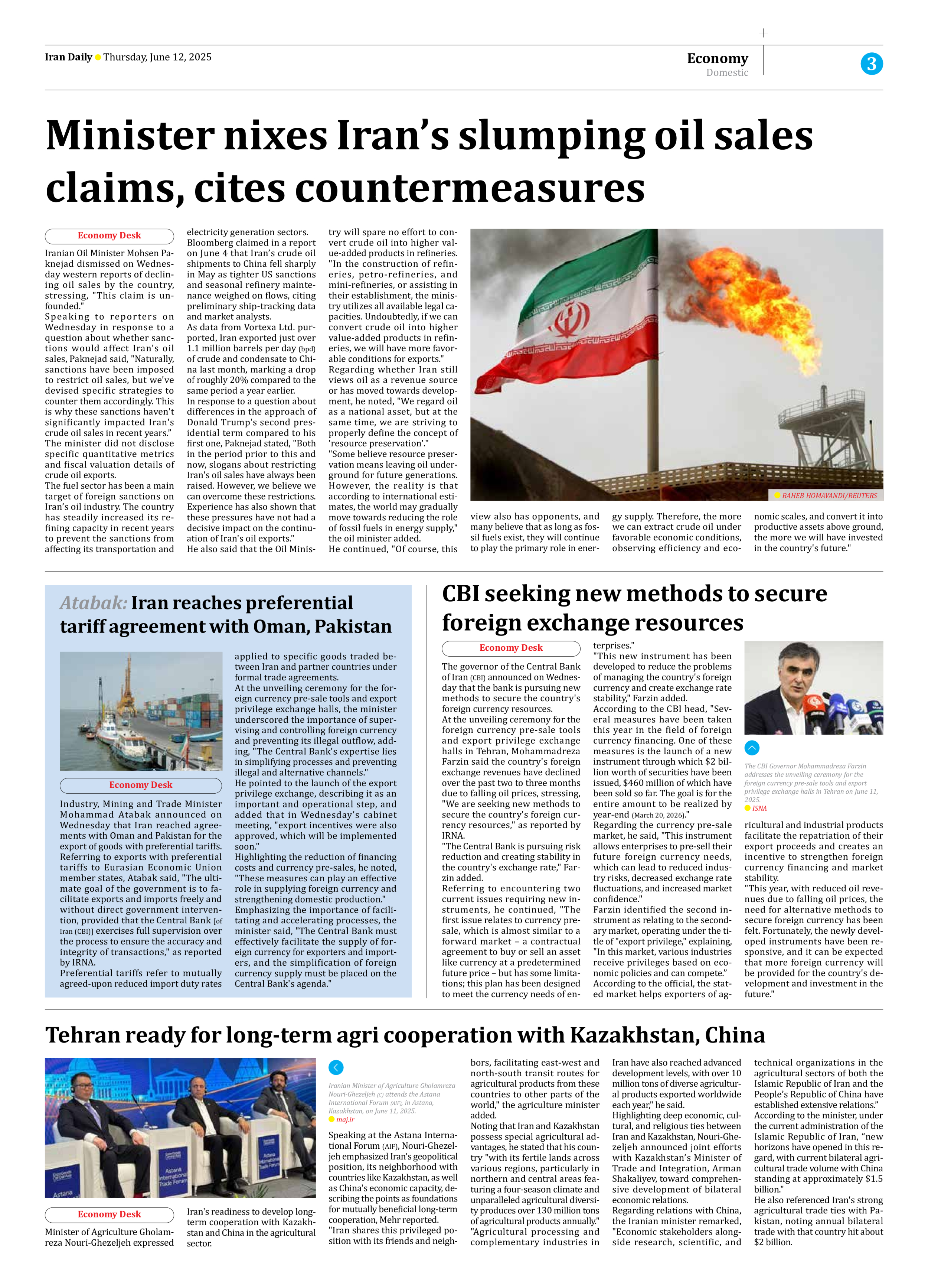
At the unveiling ceremony for the foreign currency pre-sale tools and export privilege exchange halls in Tehran, Mohammadreza Farzin said the country's foreign exchange revenues have declined over the past two to three months due to falling oil prices, stressing, "We are seeking new methods to secure the country's foreign currency resources," as reported by IRNA.
"The Central Bank is pursuing risk reduction and creating stability in the country's exchange rate," Farzin added.
Referring to encountering two current issues requiring new instruments, he continued, "The first issue relates to currency pre-sale, which is almost similar to a forward market – a contractual agreement to buy or sell an asset like currency at a predetermined future price – but has some limitations; this plan has been designed to meet the currency needs of enterprises."
"This new instrument has been developed to reduce the problems of managing the country's foreign currency and create exchange rate stability," Farzin added.
According to the CBI head, "Several measures have been taken this year in the field of foreign currency financing. One of these measures is the launch of a new instrument through which $2 billion worth of securities have been issued, $460 million of which have been sold so far. The goal is for the entire amount to be realized by year-end (March 20, 2026)."
Regarding the currency pre-sale market, he said, "This instrument allows enterprises to pre-sell their future foreign currency needs, which can lead to reduced industry risks, decreased exchange rate fluctuations, and increased market confidence."
Farzin identified the second instrument as relating to the secondary market, operating under the title of "export privilege," explaining, "In this market, various industries receive privileges based on economic policies and can compete.”
According to the official, the stated market helps exporters of agricultural and industrial products facilitate the repatriation of their export proceeds and creates an incentive to strengthen foreign currency financing and market stability.
"This year, with reduced oil revenues due to falling oil prices, the need for alternative methods to secure foreign currency has been felt. Fortunately, the newly developed instruments have been responsive, and it can be expected that more foreign currency will be provided for the country's development and investment in the future."