







Role of handicrafts in promoting cultural sustainability, global recognition
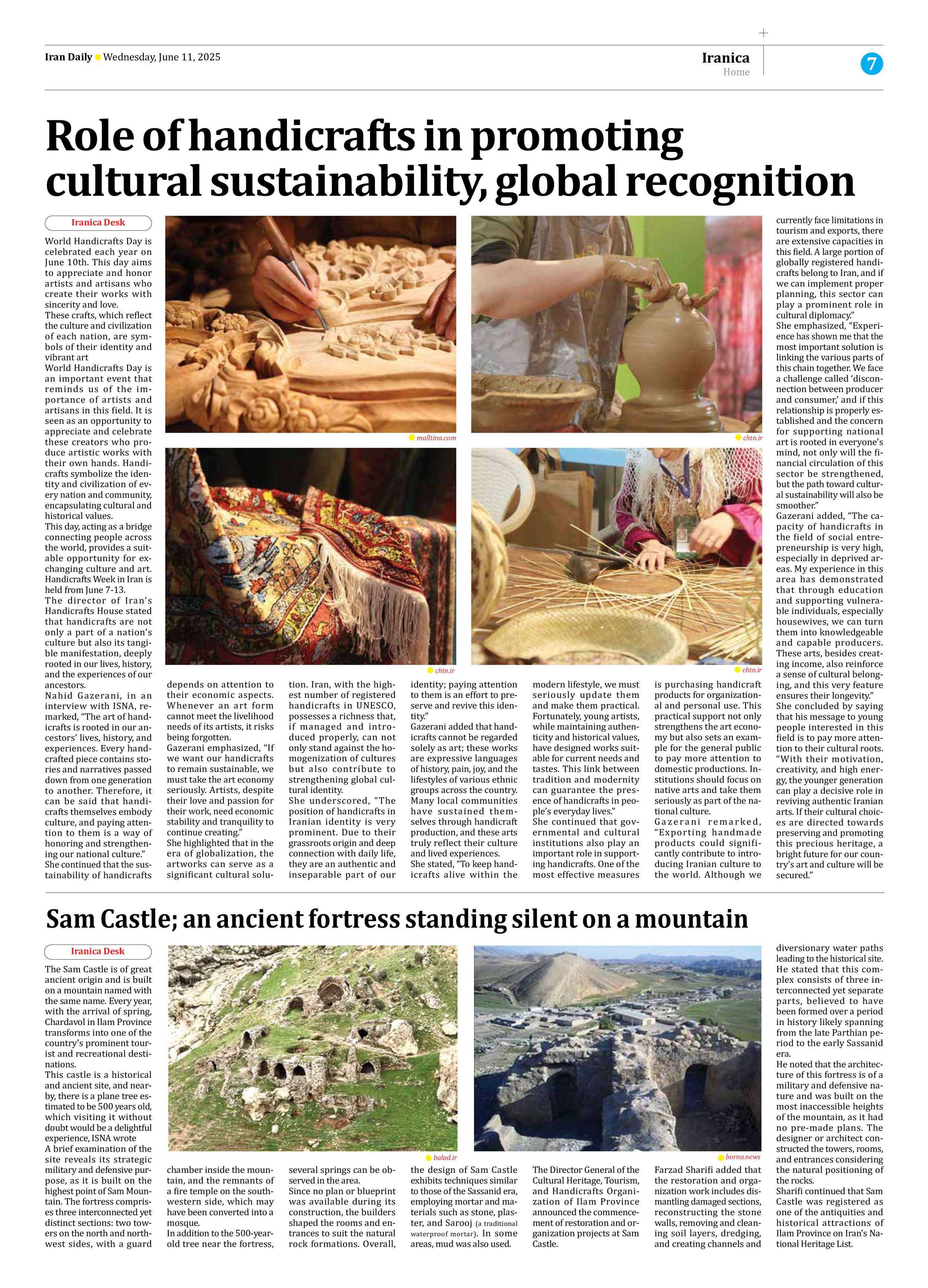
World Handicrafts Day is celebrated each year on June 10th. This day aims to appreciate and honor artists and artisans who create their works with sincerity and love.
These crafts, which reflect the culture and civilization of each nation, are symbols of their identity and vibrant art
World Handicrafts Day is an important event that reminds us of the importance of artists and artisans in this field. It is seen as an opportunity to appreciate and celebrate these creators who produce artistic works with their own hands. Handicrafts symbolize the identity and civilization of every nation and community, encapsulating cultural and historical values.
This day, acting as a bridge connecting people across the world, provides a suitable opportunity for exchanging culture and art. Handicrafts Week in Iran is held from June 7-13.
The director of Iran’s Handicrafts House stated that handicrafts are not only a part of a nation’s culture but also its tangible manifestation, deeply rooted in our lives, history, and the experiences of our ancestors.
Nahid Gazerani, in an interview with ISNA, remarked, “The art of handicrafts is rooted in our ancestors’ lives, history, and experiences. Every handcrafted piece contains stories and narratives passed down from one generation to another. Therefore, it can be said that handicrafts themselves embody culture, and paying attention to them is a way of honoring and strengthening our national culture.”
She continued that the sustainability of handicrafts depends on attention to their economic aspects. Whenever an art form cannot meet the livelihood needs of its artists, it risks being forgotten.
Gazerani emphasized, “If we want our handicrafts to remain sustainable, we must take the art economy seriously. Artists, despite their love and passion for their work, need economic stability and tranquility to continue creating.”
She highlighted that in the era of globalization, the artworks can serve as a significant cultural solution. Iran, with the highest number of registered handicrafts in UNESCO, possesses a richness that, if managed and introduced properly, can not only stand against the homogenization of cultures but also contribute to strengthening global cultural identity.
She underscored, “The position of handicrafts in Iranian identity is very prominent. Due to their grassroots origin and deep connection with daily life, they are an authentic and inseparable part of our identity; paying attention to them is an effort to preserve and revive this identity.”
Gazerani added that handicrafts cannot be regarded solely as art; these works are expressive languages of history, pain, joy, and the lifestyles of various ethnic groups across the country. Many local communities have sustained themselves through handicraft production, and these arts truly reflect their culture and lived experiences.
She stated, “To keep handicrafts alive within the modern lifestyle, we must seriously update them and make them practical. Fortunately, young artists, while maintaining authenticity and historical values, have designed works suitable for current needs and tastes. This link between tradition and modernity can guarantee the presence of handicrafts in people’s everyday lives.”
She continued that governmental and cultural institutions also play an important role in supporting handicrafts. One of the most effective measures is purchasing handicraft products for organizational and personal use. This practical support not only strengthens the art economy but also sets an example for the general public to pay more attention to domestic productions. Institutions should focus on native arts and take them seriously as part of the national culture.
Gazerani remarked, “Exporting handmade products could significantly contribute to introducing Iranian culture to the world. Although we currently face limitations in tourism and exports, there are extensive capacities in this field. A large portion of globally registered handicrafts belong to Iran, and if we can implement proper planning, this sector can play a prominent role in cultural diplomacy.”
She emphasized, “Experience has shown me that the most important solution is linking the various parts of this chain together. We face a challenge called ‘disconnection between producer and consumer,’ and if this relationship is properly established and the concern for supporting national art is rooted in everyone’s mind, not only will the financial circulation of this sector be strengthened, but the path toward cultural sustainability will also be smoother.”
Gazerani added, “The capacity of handicrafts in the field of social entrepreneurship is very high, especially in deprived areas. My experience in this area has demonstrated that through education and supporting vulnerable individuals, especially housewives, we can turn them into knowledgeable and capable producers. These arts, besides creating income, also reinforce a sense of cultural belonging, and this very feature ensures their longevity.”
She concluded by saying that his message to young people interested in this field is to pay more attention to their cultural roots. “With their motivation, creativity, and high energy, the younger generation can play a decisive role in reviving authentic Iranian arts. If their cultural choices are directed towards preserving and promoting this precious heritage, a bright future for our country’s art and culture will be secured.”