







Stepping back in time at historic Lajim Tower
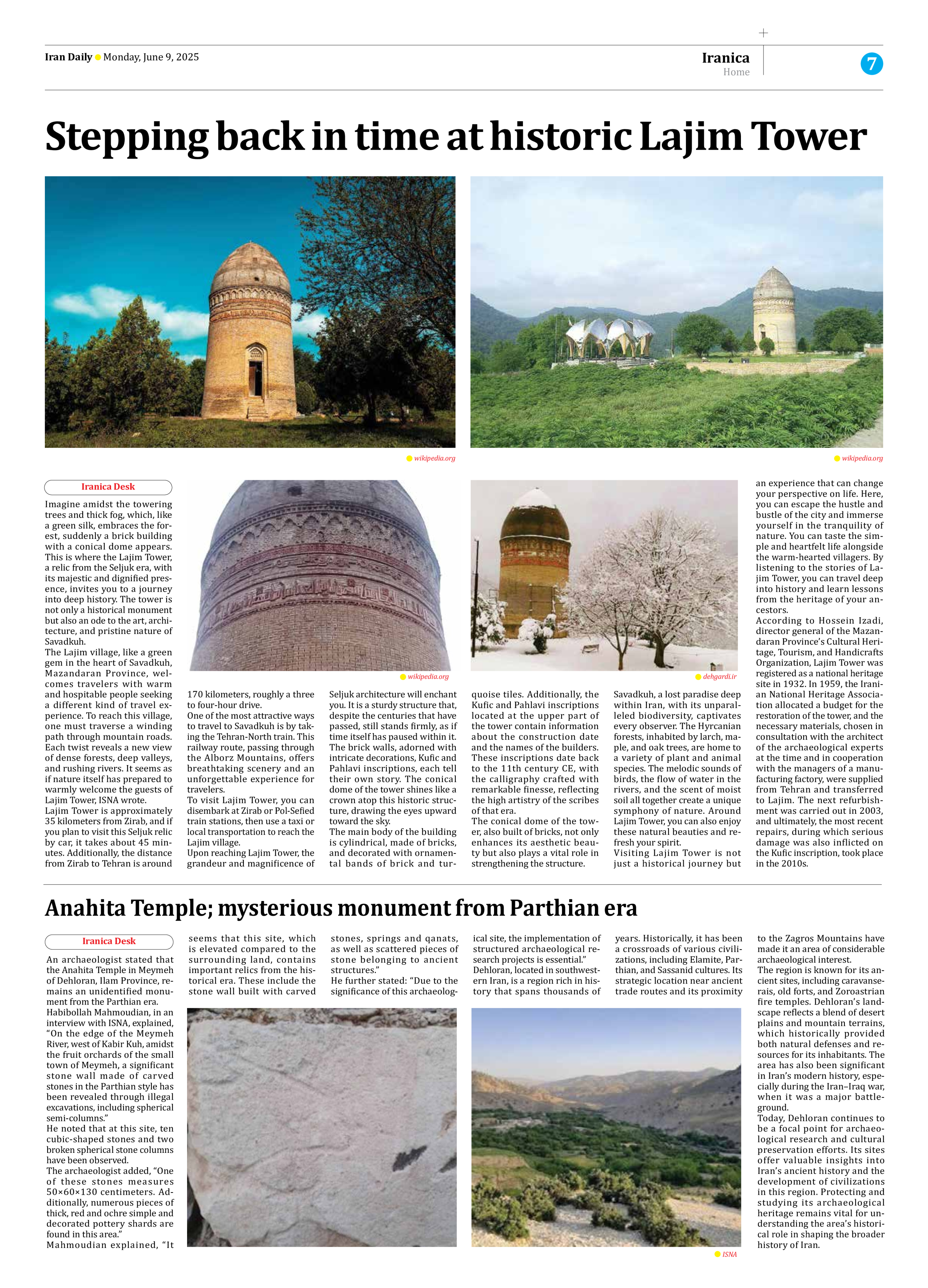
Imagine amidst the towering trees and thick fog, which, like a green silk, embraces the forest, suddenly a brick building with a conical dome appears. This is where the Lajim Tower, a relic from the Seljuk era, with its majestic and dignified presence, invites you to a journey into deep history. The tower is not only a historical monument but also an ode to the art, architecture, and pristine nature of Savadkuh.
The Lajim village, like a green gem in the heart of Savadkuh, Mazandaran Province, welcomes travelers with warm and hospitable people seeking a different kind of travel experience. To reach this village, one must traverse a winding path through mountain roads. Each twist reveals a new view of dense forests, deep valleys, and rushing rivers. It seems as if nature itself has prepared to warmly welcome the guests of Lajim Tower, ISNA wrote.
Lajim Tower is approximately 35 kilometers from Zirab, and if you plan to visit this Seljuk relic by car, it takes about 45 minutes. Additionally, the distance from Zirab to Tehran is around 170 kilometers, roughly a three to four-hour drive.
One of the most attractive ways to travel to Savadkuh is by taking the Tehran-North train. This railway route, passing through the Alborz Mountains, offers breathtaking scenery and an unforgettable experience for travelers.
To visit Lajim Tower, you can disembark at Zirab or Pol-Sefied train stations, then use a taxi or local transportation to reach the Lajim village.
Upon reaching Lajim Tower, the grandeur and magnificence of Seljuk architecture will enchant you. It is a sturdy structure that, despite the centuries that have passed, still stands firmly, as if time itself has paused within it. The brick walls, adorned with intricate decorations, Kufic and Pahlavi inscriptions, each tell their own story. The conical dome of the tower shines like a crown atop this historic structure, drawing the eyes upward toward the sky.
The main body of the building is cylindrical, made of bricks, and decorated with ornamental bands of brick and turquoise tiles. Additionally, the Kufic and Pahlavi inscriptions located at the upper part of the tower contain information about the construction date and the names of the builders. These inscriptions date back to the 11th century CE, with the calligraphy crafted with remarkable finesse, reflecting the high artistry of the scribes of that era.
The conical dome of the tower, also built of bricks, not only enhances its aesthetic beauty but also plays a vital role in strengthening the structure.
Savadkuh, a lost paradise deep within Iran, with its unparalleled biodiversity, captivates every observer. The Hyrcanian forests, inhabited by larch, maple, and oak trees, are home to a variety of plant and animal species. The melodic sounds of birds, the flow of water in the rivers, and the scent of moist soil all together create a unique symphony of nature. Around Lajim Tower, you can also enjoy these natural beauties and refresh your spirit.
Visiting Lajim Tower is not just a historical journey but an experience that can change your perspective on life. Here, you can escape the hustle and bustle of the city and immerse yourself in the tranquility of nature. You can taste the simple and heartfelt life alongside the warm-hearted villagers. By listening to the stories of Lajim Tower, you can travel deep into history and learn lessons from the heritage of your ancestors.
According to Hossein Izadi, director general of the Mazandaran Province’s Cultural Heritage, Tourism, and Handicrafts Organization, Lajim Tower was registered as a national heritage site in 1932. In 1959, the Iranian National Heritage Association allocated a budget for the restoration of the tower, and the necessary materials, chosen in consultation with the architect of the archaeological experts at the time and in cooperation with the managers of a manufacturing factory, were supplied from Tehran and transferred to Lajim. The next refurbishment was carried out in 2003, and ultimately, the most recent repairs, during which serious damage was also inflicted on the Kufic inscription, took place in the 2010s.