







Threat of land subsidence looms over Iran’s capital
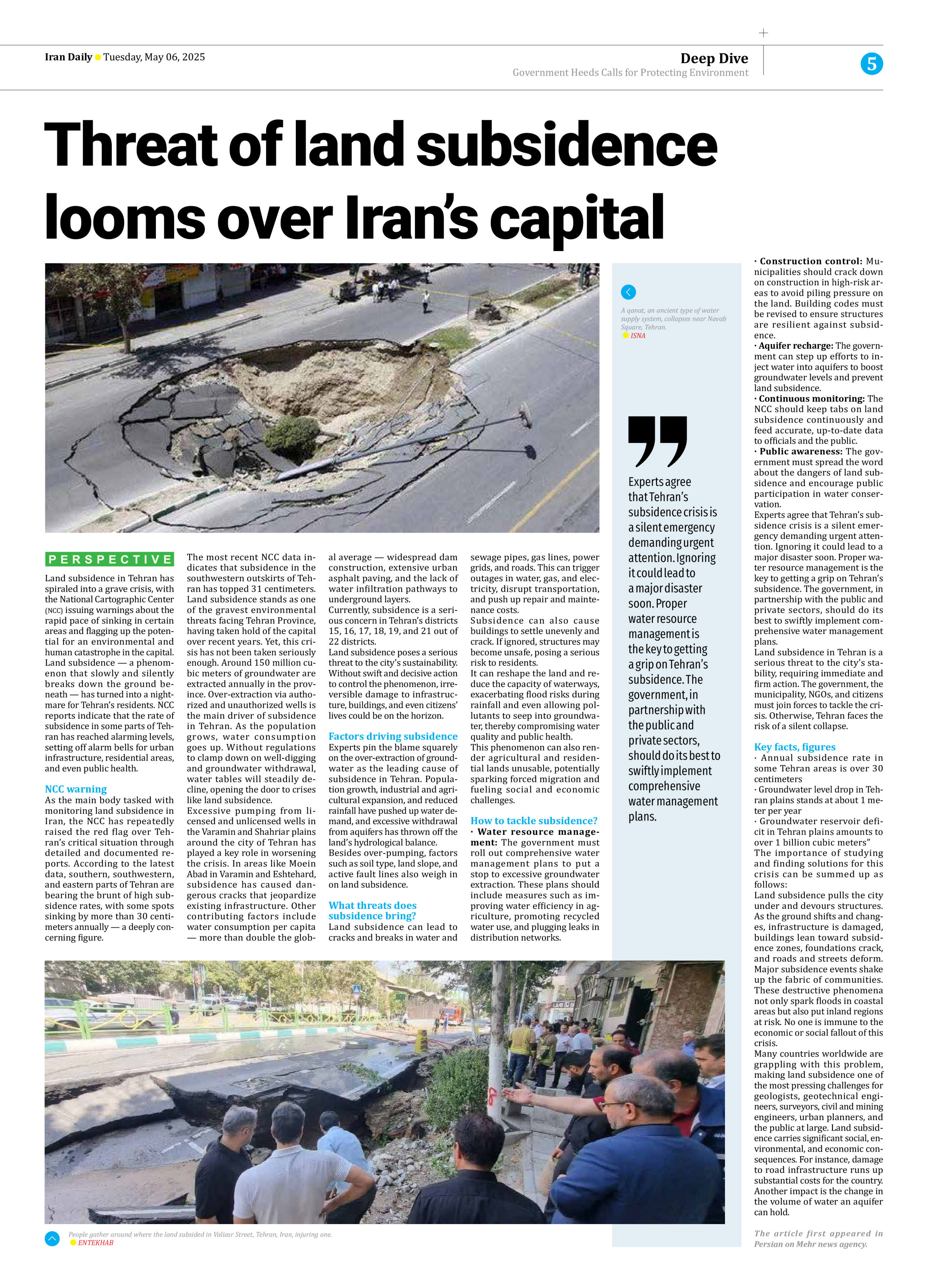
Land subsidence in Tehran has spiraled into a grave crisis, with the National Cartographic Center (NCC) issuing warnings about the rapid pace of sinking in certain areas and flagging up the potential for an environmental and human catastrophe in the capital.
Land subsidence — a phenomenon that slowly and silently breaks down the ground beneath — has turned into a nightmare for Tehran’s residents. NCC reports indicate that the rate of subsidence in some parts of Tehran has reached alarming levels, setting off alarm bells for urban infrastructure, residential areas, and even public health.
NCC warning
As the main body tasked with monitoring land subsidence in Iran, the NCC has repeatedly raised the red flag over Tehran’s critical situation through detailed and documented reports. According to the latest data, southern, southwestern, and eastern parts of Tehran are bearing the brunt of high subsidence rates, with some spots sinking by more than 30 centimeters annually — a deeply concerning figure.
The most recent NCC data indicates that subsidence in the southwestern outskirts of Tehran has topped 31 centimeters. Land subsidence stands as one of the gravest environmental threats facing Tehran Province, having taken hold of the capital over recent years. Yet, this crisis has not been taken seriously enough. Around 150 million cubic meters of groundwater are extracted annually in the province. Over-extraction via authorized and unauthorized wells is the main driver of subsidence in Tehran. As the population grows, water consumption goes up. Without regulations to clamp down on well-digging and groundwater withdrawal, water tables will steadily decline, opening the door to crises like land subsidence.
Excessive pumping from licensed and unlicensed wells in the Varamin and Shahriar plains around the city of Tehran has played a key role in worsening the crisis. In areas like Moein Abad in Varamin and Eshtehard, subsidence has caused dangerous cracks that jeopardize existing infrastructure. Other contributing factors include water consumption per capita — more than double the global average — widespread dam construction, extensive urban asphalt paving, and the lack of water infiltration pathways to underground layers.
Currently, subsidence is a serious concern in Tehran’s districts 15, 16, 17, 18, 19, and 21 out of 22 districts.
Land subsidence poses a serious threat to the city’s sustainability. Without swift and decisive action to control the phenomenon, irreversible damage to infrastructure, buildings, and even citizens’ lives could be on the horizon.
Factors driving subsidence
Experts pin the blame squarely on the over-extraction of groundwater as the leading cause of subsidence in Tehran. Population growth, industrial and agricultural expansion, and reduced rainfall have pushed up water demand, and excessive withdrawal from aquifers has thrown off the land’s hydrological balance.
Besides over-pumping, factors such as soil type, land slope, and active fault lines also weigh in on land subsidence.
What threats does subsidence bring?
Land subsidence can lead to cracks and breaks in water and sewage pipes, gas lines, power grids, and roads. This can trigger outages in water, gas, and electricity, disrupt transportation, and push up repair and maintenance costs.
Subsidence can also cause buildings to settle unevenly and crack. If ignored, structures may become unsafe, posing a serious risk to residents.
It can reshape the land and reduce the capacity of waterways, exacerbating flood risks during rainfall and even allowing pollutants to seep into groundwater, thereby compromising water quality and public health.
This phenomenon can also render agricultural and residential lands unusable, potentially sparking forced migration and fueling social and economic challenges.
How to tackle subsidence?
· Water resource management: The government must roll out comprehensive water management plans to put a stop to excessive groundwater extraction. These plans should include measures such as improving water efficiency in agriculture, promoting recycled water use, and plugging leaks in distribution networks.
· Construction control: Municipalities should crack down on construction in high-risk areas to avoid piling pressure on the land. Building codes must be revised to ensure structures are resilient against subsidence.
· Aquifer recharge: The government can step up efforts to inject water into aquifers to boost groundwater levels and prevent land subsidence.
· Continuous monitoring: The NCC should keep tabs on land subsidence continuously and feed accurate, up-to-date data to officials and the public.
· Public awareness: The government must spread the word about the dangers of land subsidence and encourage public participation in water conservation.
Experts agree that Tehran’s subsidence crisis is a silent emergency demanding urgent attention. Ignoring it could lead to a major disaster soon. Proper water resource management is the key to getting a grip on Tehran’s subsidence. The government, in partnership with the public and private sectors, should do its best to swiftly implement comprehensive water management plans.
Land subsidence in Tehran is a serious threat to the city’s stability, requiring immediate and firm action. The government, the municipality, NGOs, and citizens must join forces to tackle the crisis. Otherwise, Tehran faces the risk of a silent collapse.
Key facts, figures
· Annual subsidence rate in some Tehran areas is over 30 centimeters
· Groundwater level drop in Tehran plains stands at about 1 meter per year
· Groundwater reservoir deficit in Tehran plains amounts to over 1 billion cubic meters”
The importance of studying and finding solutions for this crisis can be summed up as follows:
Land subsidence pulls the city under and devours structures. As the ground shifts and changes, infrastructure is damaged, buildings lean toward subsidence zones, foundations crack, and roads and streets deform. Major subsidence events shake up the fabric of communities. These destructive phenomena not only spark floods in coastal areas but also put inland regions at risk. No one is immune to the economic or social fallout of this crisis.
Many countries worldwide are grappling with this problem, making land subsidence one of the most pressing challenges for geologists, geotechnical engineers, surveyors, civil and mining engineers, urban planners, and the public at large. Land subsidence carries significant social, environmental, and economic consequences. For instance, damage to road infrastructure runs up substantial costs for the country. Another impact is the change in the volume of water an aquifer can hold.
The article first appeared in
Persian on Mehr news agency.